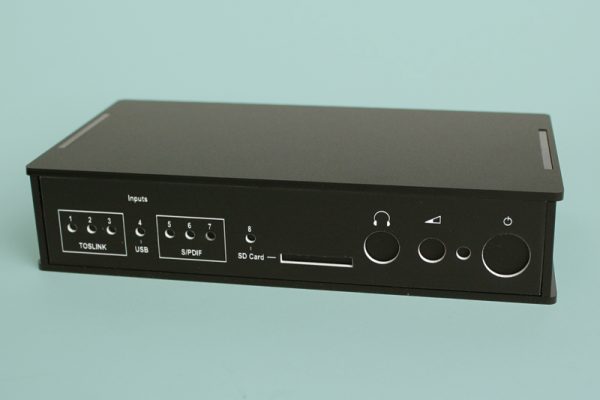
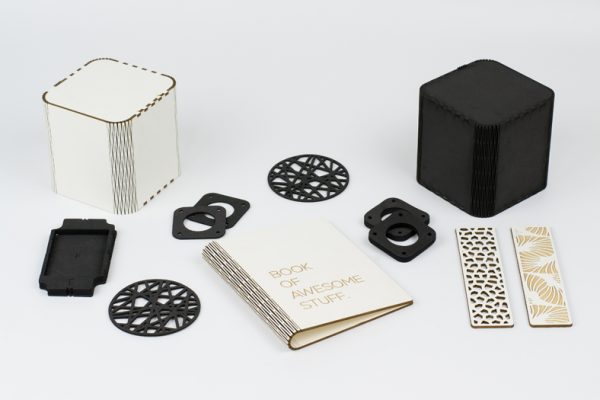
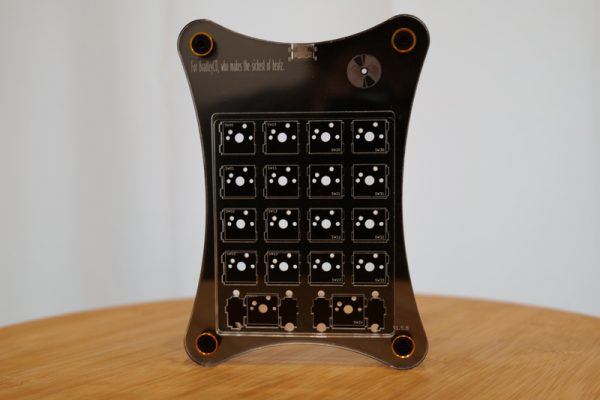
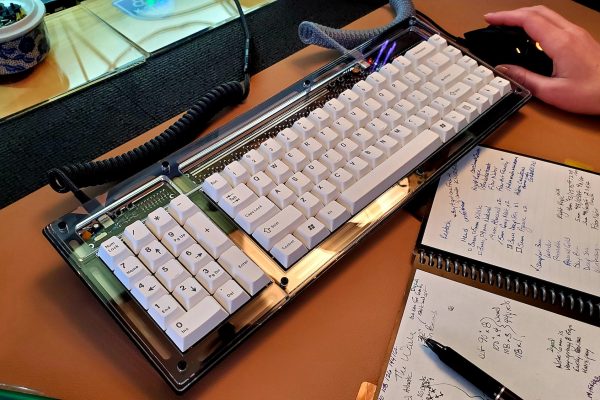
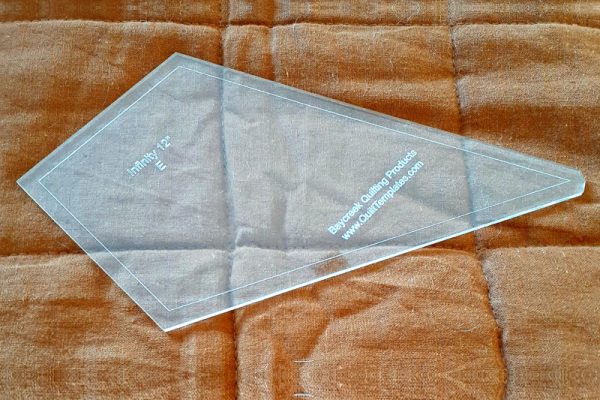
Just type ‘Maker Faire’ in the special shipping instructions.
It’s May, and that means Maker Faire Bay Area is on its way! So we’re running a perennial promo fave:
Get a FREE $50 Making Voucher with your $100 order!
To get your $50 making voucher:
1. Log in to your Ponoko account. If you don’t have one, sign up for free here.
2. Place a $100 minimum order at the Ponoko US or NZ hub.
3. Type ‘Maker Faire’ in the special shipping instructions, and we’ll email you your $50 Making Voucher.
Things you should know: Offer good for making stuff with laser cutting or 3D printing at Ponoko. Showroom or sample store purchases do not qualify. $100 minimum does not include shipping. Other coupon codes or vouchers cannot be used with this offer. Offer only good at Ponoko US and NZ. Offer totally valid for Ponoko Prime accounts! Offer ends at 8pm pacific time on May 31, 2013.
About the free Making Voucher: Promotional making voucher is good for a future order, not the initial $100 order. One promotional voucher per account. (Making Vouchers are good on making costs only.)
Bring your work to life with digital tableware and animal bones!
Sourcing high resolution models for design work (and 3D printing) can be difficult and expensive. There are a fair number of free community 3D models on the web, but many are low quality or have restrictions against commercial use.
That’s where Forme It, a new service that sells high resolution 3D models, comes in.
Forme It’s library of 3D models is broken down into three main areas: Reference, Classic, and Modern. Reference contains models of the natural world, sorted into animal, plant, and mineral. Classic is for functional designs, currently holding a variety of tableware. And Modern at present has a few patterns to texture items with.
To help people actually use the content that they buy, Forme It has started a series of long-form YouTube tutorials. The idea is show one of the available designs used in a practical way, like this tree bark scan made into a container using Blender: (more…)
His castle-under-attack toy model — complete with draw bridges, trebuchet, catapult, battleram, and a basilica — blew away all the judges.
Andrea’s inspiration came from the medieval history surrounding his home near Modena, Italy. “It’s not a strict reproduction of a real castle. I wanted to include as many medieval elements as I could,” he says.
As part of the prize, Ponoko sponsored free laser cutting for the winner. Andrea’s epic design required thirty-two P3 (about 31″x15″) size sheets. Rather than ship an entire castle battle over from the US, we worked with our friends Vectorealism, a laser cutting service based in Milan, to have Andrea’s design made closer to home.
The picture below of Andrea’s son standing behind the castle walls demonstrates just how big this toy is!
D-Shape Concrete printing awarded first place in Waterfront Construction Competition.
When Hurricane Sandy blasted some 565 miles of coastline across NYC, seawalls and other coastal features received quite a battering. Seeking out novel approaches to repairing and redeveloping these damaged areas, the NYCEDC competition “Change the Course” has awarded a $50,000 first prize to concrete 3D printer D-Shape.
The D-Shape proposal is to scan damaged infrastructure, design and fabricate encasements and extensions to the existing surfaces and then fabricate them off-site. (more…)
Consumer hardware and open source software help build a $3500 satellite.
NASA recently put three nanosatellites powered by Google HTC Nexus One smartphones into orbit. Dubbed PhoneSats, they are about the size of a coffee mug. The satellites are intended to demonstrate how the rapidly decreasing cost and increasing power of off the shelf hardware and open source software can be used for a new generation of accessible, low-cost space research. (more…)
With 3D printing gaining traction as the democratization of manufacturing, now is the time to discuss the environmental impact and envision a sustainable future for this rapidly growing industry.
To anser the question ‘Can 3D printing go green?’ Swissnex, an organization that fosters connections between Switzerland and San Francisco, is coordinating a multi-day forum on 3D printing and biomaterials.
On Friday, experts ranging from business leaders and venture capitalists to government funded researchers and academic scholars will convene to discuss their insights, debate future scenarios, and develop a roadmap for achieving sustainability across the 3D printing industry.
The Blender 2.67 release includes a feature packed 3D printing toolbox
Blender has long supported the .STL file format used to export for 3D print and it is very welcome news that there will be additional support within the software to help modelers. As a popular, free and open source 3D modeling software package, these new features will greatly help save users’ time in finding issues with their models.
The new toolbox looks set to have features useful for printing models both with online services such as Ponoko, and also with RepRap or Makerbot kitset 3D printers. Models for 3D printing need to be perfectly watertight, so all their edges need to meet to enclose a volume. For most users this can cause issues from time to time, trying to find where a tiny hole might exist. (more…)
Art/tech nonprofit CODAME is “exploring the dimensions of 3D printing” — all 4 of them. What’s the fourth dimension of 3D printing? You’ll have to find out from CODAME featured artist and speaker Stefano Corazza. CODAME 3D PRINTING will be at Adobe Systems in SOMA San Francisco on Wednesday, May 1 from 6-9pm. Tickets are donation only, but $10 is recommended.
There will be performance art, live music, 3D printing show & tell, plus talks on 3D printing as applied to Business, Gaming, Manufacturing, Biology, and Art. Check out the full featured speaker/artist profiles here, including Ponoko CMO Kristen Turner (yep, talkin’ about myself in 3rd person).
Can’t make it to this event? CODAME has an extensive calendar of events lined up for their 2013 program — everything from data visualization and hacking to fundraising and a full-on festival.
The MIT Hobby Shop was founded 75 years ago by a group of students who wanted to make things, who wanted to bring their ideas into the real world. The Shop has changed considerably over the years, but it still relies heavily on peer-to-peer teaching and an interdepartmental approach.

In the 1937-38 academic year, Vannevar Bush, then Vice President of MIT, granted a group of 16 MIT students permission to use a room in the basement of building 2. With equipment they found around the Institute they set up a wood and metal shop in the 16-foot by 22-foot area. The club members chose the name “Hobby Shop” based on their belief in the philosophy that the well rounded individual pursued interests outside their profession – hobbies.