The Neo-Artist: a high-tech guide to making

One man’s mission to solve the economic downturn for creative people.

Lincoln Kamm spent 12 years in the animation industry before breaking out and producing his own works. He has since met with notable success with six-figure sales and is now helping others learn how they too can do the same.

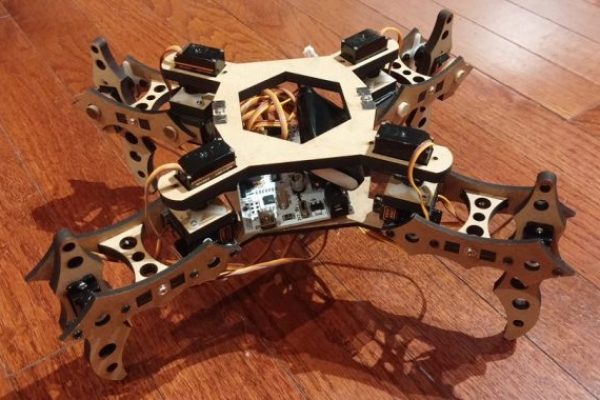
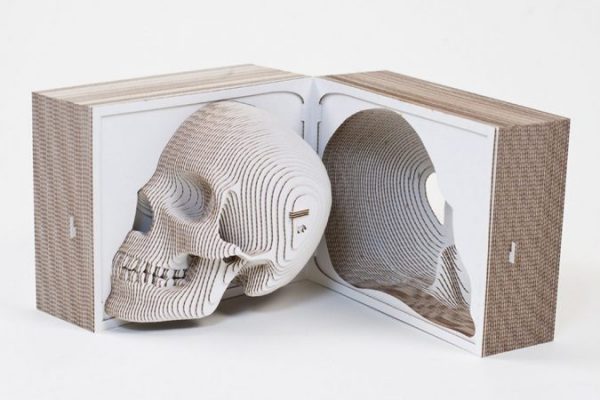
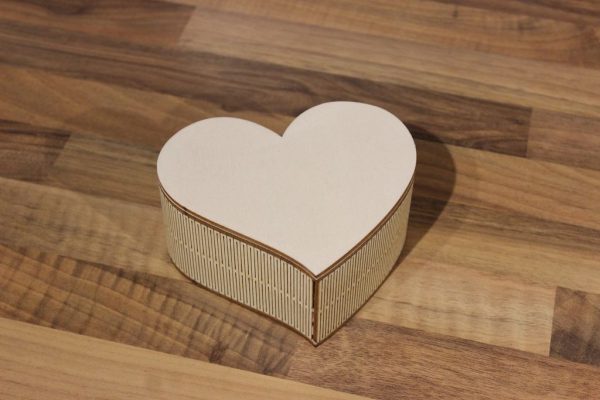
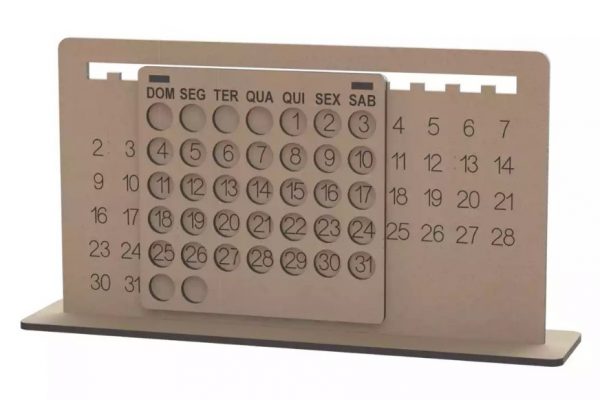
In an upcoming publication The Neo-Artist, Lincoln expands on his college lecture series and consulting experience. The book is a treasure-trove of knowledge that aims to teach creative people about the latest in high-tech hardware and software for turning ideas into real physical objects.

Topics covered include 3D printing and laser cutting, designing custom electronics, clothing and more. Most importantly, The Neo-Artist will also show how to make other aspects of the available technologies work for you to help market and sell your work. It’s perfect for makers who are just starting out and will still have plenty to offer those who have been in business for years, guiding them to the next level and beyond.

So if you are a creative person who’s into technology, be sure to take part in The Neo-Artist Kickstarter campaign and make a pledge to secure yourself a copy of the book. It’s time to leave the rat race behind.

The Neo Artist via Kickstarter

Related posts:

3D printed ukulele

Digital manufacturing never sounded so sweet * UPDATE * video added!

There is a saying amongst ukulele players. It goes something along the lines of “Music self played is happiness self made.” So imagine how happy Matthew must be, as he strums away on his 3D printed ukulele!

We’ve seen an impressive folding laser cut uke before, and it was only a matter of time before someone had a serious crack at 3D printing one. Matthew (aka Koa Soprano) is no stranger to making his own musical devices, having previously tried his hand at violins and other stringed instruments.

His ukulele is something different though. Printed on a Stratasys Dimension 1200es 3D printer, it took about 37 hours for the body, neck and pegs to be produced. Allowance had to be made for the build area of the printer, which means that the headstock is a little shorter than usual. A neat dovetail was planned in to the Solidworks model so that the neck and body can be easily assembled after printing. Pegs were printed both horizontally and vertically to see which orientation produced a neater result.

Click through to see the finished instrument, as well as a few insights into pitfalls that were overcome during the printing process.

* UPDATE * video included after the break!
(more…)

Related posts:

The sweetest 3D printing of all

Sugar prints that are good enough to eat

Sculptural geometric forms take on a delicious twist with a sweet approach to 3D printing from The Sugar Lab.

It all started when husband and wife team Kyle and Liz von Hasseln wanted to make a sweet gift for a friend’s birthday. Without an oven and therefore unable to bake a cake, the duo applied their architectural skills and set out to 3D print one. What resulted was a simple cupcake with “Chelsea” (the friend’s name) printed in sugar across the top. Excited by the experimentation process, Kyle and Liz have refined the sugar printing technique to produce some stunning – and possibly quite delicious – sculptural forms.

The process uses alternating strands of sugar with layers of a water and alcohol solution that seals and solidifies the sugar.     (more…)

Related posts:

Tinkercad finds a new home at Autodesk

The future is looking solid for rejuvenated browser-based modeler

Fans of the 3D modelling app Tinkercad are turning their frowns upside-down with the big announcement that the company is back in action, and we’re certainly getting excited… because Tinkercad has been acquired by Autodesk.

What exactly does this mean? Well, not only is it great to see Tinkercad back in action; but with the might of this industry juggernaut behind it, Tinkercad looks to be locked into a secure future as elements are slated to filter through into the innovative suite of 123D apps and more.

Tinkercad’s revolutionary Gen6 geometry kernel played a significant role in sealing the deal with Autodesk. The strength of this browser-based solid modelling utility has already proven to be a hit within the Ponoko community. One of the notable success stories of the Ponoko API, Tinkercad makes generating SVG outputs that are ready for laser cutting or 3D printing so easy, it is literally child’s play.

With Autocad at the helm, the Tinkercad free account now has unlimited designs and full import/export functionality, making it that much more appealing to new makers and educators.

“..we have supercharged the free plan. You can now create unlimited designs, all import and export functionality is enabled and ShapeScripts are turned on for free accounts.”

Click through to see the full press release from Tinkercad.   (more…)

Related posts:

Capturing lightning in 3D

Two photographs combined to model the path of a lightning strike

A chance encounter made possible by the informational maelstrom otherwise know as Reddit has resulted in this dynamic reconstruction of a lightning strike.

The animated image above is a render produced in Blender, and you can see how it all came together in a brief but informative post over on Richard Wheeler’s Calculated Images blog. In short, two separate photographers happened to snap pictures of the same bolt of lightning from slightly different positions. Richard then took these pictures and applied them in a similar manner to the way a stereoscopic image is resolved.   (more…)

Related posts:

Laser cut wooden record

Digital music goes analog once again

We’ve encountered Amanda Ghassaei and her digitally fabricated records before, when she 3D printed some rockin’ tracks that were playable on a standard turntable. This time around, she has turned her talents towards exploring the potential of laser cutting to get her groove on.

The visual impact of this laser cut timber is stunning, but how does a record cut from Maple actually sound? As you’ll hear when you click through to the video after the break, we aren’t really talking hi-fidelity… however as an experimentation it is very interesting indeed. (more…)

Related posts:

Reshaping NYC with 3D printing

D-Shape Concrete printing awarded first place in Waterfront Construction Competition.

When Hurricane Sandy blasted some 565 miles of coastline across NYC, seawalls and other coastal features received quite a battering. Seeking out novel approaches to repairing and redeveloping these damaged areas, the NYCEDC competition “Change the Course” has awarded a $50,000 first prize to concrete 3D printer D-Shape.

The D-Shape proposal is to scan damaged infrastructure, design and fabricate encasements and extensions to the existing surfaces and then fabricate them off-site.   (more…)

Related posts:

3D Printed Headphones

Hi-Fi goes Low-fi for some DIY audio gear

Having previously applied some 3D printed augmentation to Apple’s famous little earbuds, Paris-based designer Jean-Christophe Karich has once again turned his talents to the mysteries of portable audio products.

The proposition is simple. How would you go about producing a fully functional pair of audio headphones, without using any commercially manufactured parts? In this research project, only the wire, solder and magnets have been supplied – everything else can be printed on a standard 3D printer.   (more…)

Related posts:

3D Tech and the Future of the Museum

3D printing and 3D scanning to play a major role

Museums across the globe are steadily shaking their dusty old stereotypes, but how far do they actually go in embracing cutting edge technologies?

An interesting publication from MW 2103 by Neely and Langer takes a serious look at the role digital manufacturing can play in paving the way for innovative museums to add value like never before.

Highlighting 3D technologies including 3D printing and 3D scanning in particular, the article paints a positive picture of the way that museums can engage patrons with stimulating, challenging exhibits. You can really see the influence of the rise of the Maker Movement, as shown in the image above where kids learn about 3D printing at the Art Institute of Chicago.

Things get a lot more exciting as you read further, with a “return to materiality” championing physical interaction in an environment that has traditionally been hands-off. (more…)

Related posts:

3D Printed Augmented Reality Jigsaw Puzzle

Innovative concept brings emerging technologies together

No stranger to tinkering with Augmented Reality, Patrik Johansson has gone one step further by combining 3D printed puzzle tiles to create an AR jigsaw that is really turning heads.

The markers were produced in Photoshop, with 3D printing achieved via SketchUp. Making the most of SketchUp’s versatility, the Augmented Reality model uses AR-media’s Plugin to bring the jigsaw to life.

via NotCot

Related posts: