Hummingbird is a ‘pre-Arduino’ for kids

Making it even easier to get into electronics

We all know and love Arduino, and what it has done for the rapidly growing world of DIY electronics. Yet the complexities of Arduino can be a bit much for young makers, and education enthusiast Tom Lauwers just may have the answer to harness that creativity while it is still fresh.

Heralded as a kind of “pre-Arduino”, the Hummingbird kit from Birdbrain consists of a custom controller that connects to a range of motors, sensors and lights that allow kids to build their own functional robots and more.

“…the Hummingbird controller is designed for kids who have never touched electronics or programming before.”

It’s really easy to get started making fully functional electronic devices, but don’t take our word for it. Click through to the source where Tom talks it all through in a neat clip featuring an animatronic cardboard dragon made by some 10 year old kids. Now that’s seriously fun.

Hummingbird via Engadget

Related posts:

Laser-cut mechanical Donkey Kong

Complete with original NES controller!

This is amazing: Martin Raynsford combined a couple servos, switches, and ball bearings with an Arduino and a lot of laser-cutting to make a functioning electro-mechanical replica of the beloved old Donkey Kong game. Not satisfied with this awesome (and well documented) build, Martin already has plans to scrap version 1 and rebuild the game to bring in even more of the original gameplay. Genius!

Related posts:

Laser-cut Nixie Tube Geiger Counter

An amazing result from the Ponoko + Ogi Lumen + Bildr competition

Late last year Ponoko and Ogi Lumen sponsored a design competition for the wonderful bildr.org community. The prize was a set of nixie tubes and a Personal Factory voucher for laser-cutting.

Instructables user moustachenator won the prize and put it to good use, building this exquisite Gieger counter. He’s documented the build process with loving detail so you too can build your own retro-futuristic radiation detector just in time for the apocalypse.

Related posts:

Paper Robot walker

Shuffling his way into your heart, one step at a time…

Referring to his extraordinary creations as Mechanical Paper Models, Japanese craftsman Kikousya transforms this everyday material into kinetic works of art.

There’s no laser cutting here, no CNC or 3D printing… the whole construction is hand crafted from regular paper and a few sticks of dowel. With gears, cams, cogs and more all powered by rubber bands to bring the PR-V robot to life.

“The legs are alternately drawn forward by a crank mechanism, the bottom surface of the foot has a structure that always moves parallel to the floor and become parallel links.”

Click through for an amazing construction video after the break, where you will see just how complex this mechanism truly is. If you think you’ve got what it takes after seeing the detail and persistance that goes into this, you can make your own by purchasing instructions (for the earlier PR-III version) on CD in a special kit at the source. (more…)

Related posts:

Inflatable robotic arm for DARPA

It expands from a ball, weighs half a pound, and lifts five pounds.

Depending on who you ask, DARPA is either the monster under our collective bed or they are the masked guardians of civil society. Sometimes both. Either way, they have a history of funding some pretty cool projects. This robotic arm is no exception. It was made by the company iRobot under contract by DARPA as a next-gen combat robot for use in environments too small or too hazardous for human soldiers.

The video after the jump is definitely worth watching. It weighs less than half a pound, inflates from a small ball, and can lift up to five pounds. It’s difficult to believe, but it works.
(more…)

Related posts:

3D printed toy records

The future meets the past with this sweet OpenSCAD project

This is a cool project: Instructables user fred27 reverse-engineered the encoding pattern for an old Fisher Price toy record player and developed a method for 3D printing or CNC cutting new records. He’s also written software that allows you to convert your own tunes to play on the forty-year-old toy. This is an excellent demonstration of parametric modeling using the free OpenSCAD software. Brilliant!

Related posts:

3D printed pen holder for Drawbot

Now your drawing robot is even quicker on the draw…

With a soft spot for drawing and a special place in my heart for all things robotic, it’s kind of understandable that the Drawbot gets me excited.

Rather than leaving Drawbot users to fiddle around changing pens, this 3D printed clamp will make switching over to a new Magnum felt-tip quicker and easier than ever. It’s a simple pen holder modification, but one that makes a noticeable difference to the Drawbot’s process.

The image above is a working prototype printed on a Makerbot by Michael Audette, and boasts the following features:

  • * Pinch to release
  • * Rubber band for spring tension
  • * Holds a 20mm marker, can be scaled to hold a Sharpie fine point marker

With the Drawbot featuring as a part of the Robots for Schools campaign on Indiegogo, this modification couldn’t have come at a better time.

via Marginally Clever

Related posts:

Laser-cut force feedback controller for Angry Birds

Simulating a slingshot with an Arduino, motorised fader, and MaxMSP

{sound + design} released a beautifully executed and beautifully documented hack this month.

Super Angry Birds is a force feedback USB controller for Angry Birds that simulates the feeling of a slingshot. All the controls found in the game are available in this device. You can control the pull, the angle, and of course trigger the special power of the bird.

Underneath the slick design is a serious piece of hardware and software engineering work. Very cool.

Related posts:

Pibow: stacked laser-cut enclosure

A new way of building DIY electronics project boxes
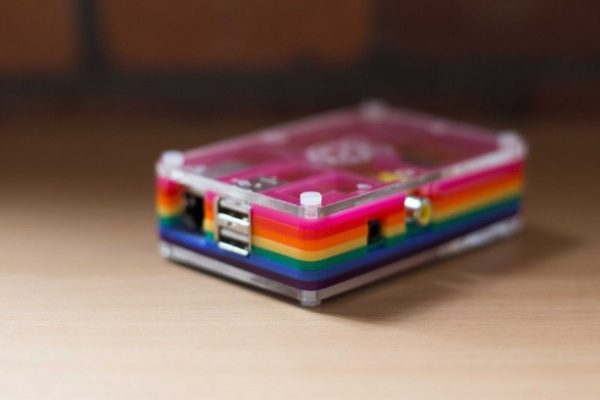
Since the Raspberry Pi launched six months ago, a huge ecosystem of enclosure designs have sprouted up out of the creative commons community. The Pibow is a particularly innovative approach, consisting of a stack of laser-cut acrylic layers. It’ll be interesting to see how long it takes for this new technique to spread to through the community.

Related posts:

How to: design a laser-cut box for your DIY electronics project

Who doesn’t like putting things in boxes!?
This mixer rehousing project is the perfect example of what you can do with a laser cutter and an online box-making app. If you prefer to use a tool integrated into Inkscape to make your finger-jointed box template, check out this sweet plugin.

With tools like these it’s getting easier and easier to design your own project enclosures ready to be shipped from your Personal Factory.

Related posts: