Choosing the right material for the job January 13
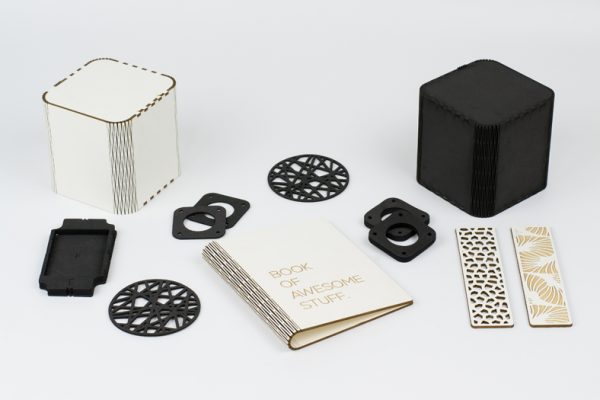
Material properties are a fundamental consideration in product design.

Alright, Christmas had been and gone, the dense fruit cake is nothing but a distant memory and the occasional twinge of indigestion, and last thing you probably want to see now is yet another Christmas tree. Especially, since you’re probably still struggling to remove pine needles off your carpet. This post, however, is less about the joy of giving/overeating/tree decorating/believing in Santa/holidays. None of those, in fact. The tree is merely an example of how to decide which material is most suitable for the job at hand. In this case, the job at hand is making a small decorative Xmas tree that can double up as a jewellery tree.

Constraints:
- smallish in size for economical production
- flatpacking but free-standing
- easy to assemble
- durable
- engraved logo/branding (in case I forget that I designed it)
| Material | Pros | Cons |
| 1mm styrene | Engraves well | Poor edge quality in detail
Breaks easily |
| 3mm acrylic | Engraves well
Many colour options No need for locating tabs |
Detail is fragile |
| 0.8mm polypropylene | Very light
Durable Some colour options |
Doesn’t engrave well |

Nodes/locating tabs are needed to keep top of the tree together and securely position the tree on the base
Polyprop is a clear winner here, and the engraving issue is easily resolved by engraving the acrylic base, rather than the tree itself.
Of course, experimenting with all the different materials can get expensive, so it’s always a good idea to check a material’s properties in the catalogue and press the ASK button if you still have questions.
Note: some of the “flawed” examples were produced deliberately to illustrate a point, as opposed to being poorly considered to illustrate my incompetence as a designer.
You may also be interested in the following related posts:
10 simple steps to make and sell your custom product
How to make snug joints in acrylic
How to create snug fitting for your 3D products